
Quality, Compliance & Manufacturing
Quick answer: Personal care contract manufacturing becomes a scale strategy when your business needs more than individual SKUs. For established brands, retail buyers and multi-market teams, the priority is coordinating product categories, packaging components, production specifications, quality controls and shipment readiness through a reliable operating plan - not simply placing a larger production order.
As a personal care brand grows, manufacturing complexity rarely stays within one product category. A facial serum launch may be followed by cleansers, body lotions, shampoos, hand creams, gift sets or retail-exclusive formats. Each new SKU can introduce a different formula profile, packaging supplier, production schedule, quality requirement and delivery risk.
That is why personal care contract manufacturing should be evaluated as a supply-chain decision, not only as a production purchase. The right manufacturing partner can help your team organize a broader product portfolio with clearer specifications, more coordinated production preparation and fewer disconnected handoffs between suppliers.
This article is designed for brands already moving beyond a first OEM project. If you are comparing the basic OEM, ODM and private label cooperation models, start with our Beauty Products Contract Manufacturing Buyer’s Guide.
In this guide
Working with multiple specialist suppliers can make sense during early product exploration. However, as your assortment grows, fragmented sourcing can create hidden operational costs: duplicated quality reviews, different documentation formats, separate packaging timelines, repeated freight coordination and more internal approval cycles.
Consolidation becomes especially relevant when your team is managing recurring replenishment, retailer launch calendars, multi-SKU promotions or regional distribution plans. In these situations, a manufacturing partner should be able to coordinate the categories included in your specific program - while maintaining clear product-level specifications and approval responsibilities.
The goal is not to force every product into the same formula platform or packaging format. The goal is to create a more manageable operating system around your portfolio: aligned specifications, controlled revisions, planned material readiness and a clearer view of what must happen before a shipment date.

Multi-category production is more demanding than placing several products on the same purchase order. Each category has different technical, packaging and handling requirements. A practical partner needs to coordinate these requirements without losing control of individual SKU details.
| Product Area | Typical Operational Focus | What Your Team Should Align |
|---|---|---|
| Face Care | Texture profile, active-ingredient handling, compatibility and premium-packaging details. | Formula specifications, fill volume, component approvals and artwork versions. |
| Body Care | Larger fills, fragrance consistency, pump or bottle selection and replenishment planning. | Bulk-volume planning, packaging lead times and seasonal demand forecasts. |
| Hair Care | Viscosity, foam profile, conditioning feel, bottle performance and cap compatibility. | Performance criteria, pump or closure selection and batch-release parameters. |
| Hand & Foot Care | Rich textures, tube or jar functionality and coordinated retail-ready presentation. | Pack-size architecture, product claims review and component standardization opportunities. |
| Sets & Bundles | Kitting sequence, outer packaging, assortment accuracy and shipment configuration. | Final SKU matrix, kit bill of materials and delivery-ready packing plan. |
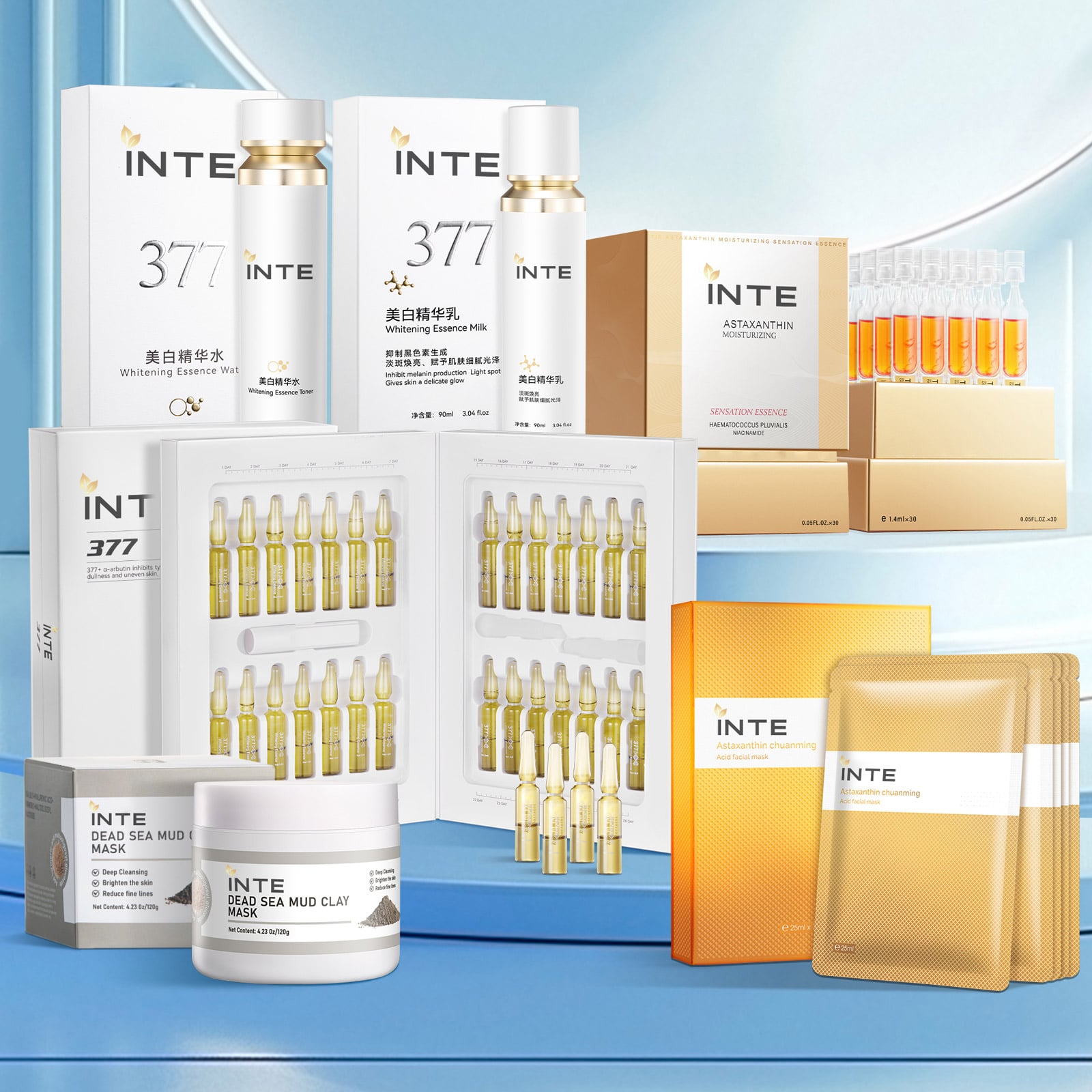
At INTE, we support product programs across face care and hair and body care, helping procurement teams organize development, packaging coordination and production preparation around the needs of the overall portfolio.
Supply resilience is not created on the day a shortage appears. It is built earlier, when your team identifies which formulas, ingredients, components and launch dates are commercially critical. This is particularly important when one brand program includes high-volume core SKUs, retailer-specific packs and seasonal gift or promotional sets.
A structured manufacturing plan should map critical materials, approved component versions, packaging dependencies, production priorities and decision deadlines. Where appropriate, brands can also evaluate packaging commonality across selected SKUs. This does not mean making every product look the same; it means identifying where standardized pumps, bottles, caps or outer-carton structures can simplify future purchasing and replenishment.
Shipment consolidation may also be considered when product readiness, order volume, destination requirements, Incoterms and freight arrangements allow it. A coordinated manufacturing plan can reduce fragmented factory-to-forwarder handoffs, but the final logistics approach should always be assessed case by case.
Planning a Multi-Category Personal Care Program?
Share your SKU plan, target market, packaging direction and delivery priorities. We can help you assess the manufacturing coordination points before production preparation begins.
Discuss Your Manufacturing Plan
A laboratory sample proves product direction. A scale-up plan proves whether that direction can be manufactured repeatedly under controlled production conditions. Moving from a 5kg development sample to a large commercial bulk batch - including production on high-capacity vacuum emulsification equipment where applicable - is not a simple multiplication exercise.
Changes in batch size can affect mixing efficiency, heating and cooling behavior, shear exposure, air removal and the timing of sensitive ingredient additions. For emulsions, gels, cleansers and high-viscosity products, these variables can influence the finished product’s appearance, sensory feel, viscosity and color profile.
| Production Stage | Primary Objective | Key Controls to Review |
|---|---|---|
| Laboratory Development | Confirm the intended formula direction and product profile. | Texture, odor, color, pH, viscosity and initial packaging fit. |
| Scale-Up Review | Translate the approved direction into a controlled larger-batch process. | Addition order, mixing time, shear, process temperatures, vacuum and hold conditions. |
| Commercial Bulk Production | Produce according to documented manufacturing parameters. | In-process checks, bulk appearance, viscosity, pH and filling readiness. |
| Finished Product Release | Confirm the batch meets agreed release criteria before shipment preparation. | Appearance, odor, color, net content, packaging integrity and project-specific quality criteria. |
The objective is not to promise that every batch is “100% identical” in an absolute sense. The objective is to reproduce the approved product profile within pre-agreed manufacturing specifications and batch-release criteria. That is the practical standard procurement teams should expect from scalable cosmetic manufacturing.
Packaging must be managed with the same discipline. Learn more about how packaging choices affect a scalable product program in our Private Label Cosmetic Packaging guide.
Q4 demand is often challenging because it compresses several requirements into the same period: promotional forecasts, retail delivery windows, gift-set packaging, freight cutoffs and seasonal material demand. Waiting until the final production window to confirm packaging or forecast volumes can leave too little room for controlled adjustments.
A stronger approach is backward planning from your required delivery date. Your team should identify the date by which finished goods must be shipment-ready, then work backward through finished-product release, production scheduling, component arrival, artwork approval and material preparation.
Capacity allocation and material preparation should always be discussed project by project. They depend on the approved formula, packaging readiness, forecast visibility, confirmed order timing and production schedule - not on a generic promise of immediate availability.

A more consolidated sourcing model works best when both the buyer and manufacturer share a complete operating picture. Before moving a multi-category portfolio, prepare the following information:
For a broader supplier-evaluation framework, see our guide: How to Evaluate a Cosmetic Contract Manufacturer.
Personal care contract manufacturing at scale is about building operational confidence across your portfolio. When formulas, packaging, production parameters, quality checkpoints and shipment priorities are organized together, your team can spend less time resolving disconnected supplier issues and more time managing brand growth, retail execution and future product expansion.
At INTE, we work with procurement teams to coordinate the practical manufacturing requirements behind multi-category personal care programs. We can review your product matrix, identify critical coordination points and help structure a project plan around your approved formulas, packaging direction and commercial deadlines.
Build a More Resilient Personal Care Supply Plan
Tell us which categories, formats, packaging components and delivery targets are part of your next program. Our team will help you identify the manufacturing coordination priorities.
Request a Manufacturing ConsultationIt depends on the product categories, formula requirements, packaging formats, target markets and production plan. A practical evaluation should confirm that the partner can coordinate the categories included in your specific portfolio while maintaining appropriate product-level controls.
No. The purpose of one-stop sourcing is better coordination, not forced standardization. Brands may choose to standardize selected components where it supports purchasing efficiency, while keeping category-specific packaging where it is needed for product performance or brand positioning.
It means manufacturing the approved product profile within defined specifications and release criteria. Depending on the product, these criteria may include appearance, odor, color, pH, viscosity, net content, packaging integrity and other agreed quality parameters.
Start with your required shipment-ready date and plan backward. Confirm core SKUs, forecast volumes, packaging decisions, artwork approvals and critical material requirements early enough to support your agreed production schedule and logistics plan.
 Hot News
2026-11-17
2026-11-13
2026-11-11
2026-11-09
2026-11-06
2026-11-04
Copyright © 2025 by Inte Cosmetics (shenzhen) Co., Ltd.
 EN