
The best face masks are not defined by one trending ingredient or one premium-looking package. For skincare brands, distributors and professional beauty buyers, a successful mask program starts with the right format, a well-matched essence or base formula, reliable packaging and a manufacturing partner that can turn the concept into repeatable production. At INTE, we help buyers evaluate these decisions before development moves forward.
Buyers searching for the best face masks are often comparing more than an ingredient list. They need a product that can fit a clear commercial role: a hero SKU for a new skincare brand, an add-on item for a facial serum line, a professional treatment option for salons and spas, or a gift-set product with strong visual appeal.
From a manufacturing perspective, an effective mask brief brings together five decisions: target users, product format, formula direction, packaging system and target order volume. When those points are clarified early, it is easier for us to recommend practical raw-material, packaging and development routes.
Start with a focused format and a clear claim direction. A hydration, soothing or radiance-oriented concept is often easier to communicate than an overly complex formula with too many competing messages.
Focus on repeatable quality, substrate consistency, packaging supply stability, documentation needs and the ability to build coordinated mask collections for different channels or markets.
If your mask program is part of a broader facial skincare range, you can also explore our Face Care OEM/ODM solutions for serum, toner, cleanser and face cream development.
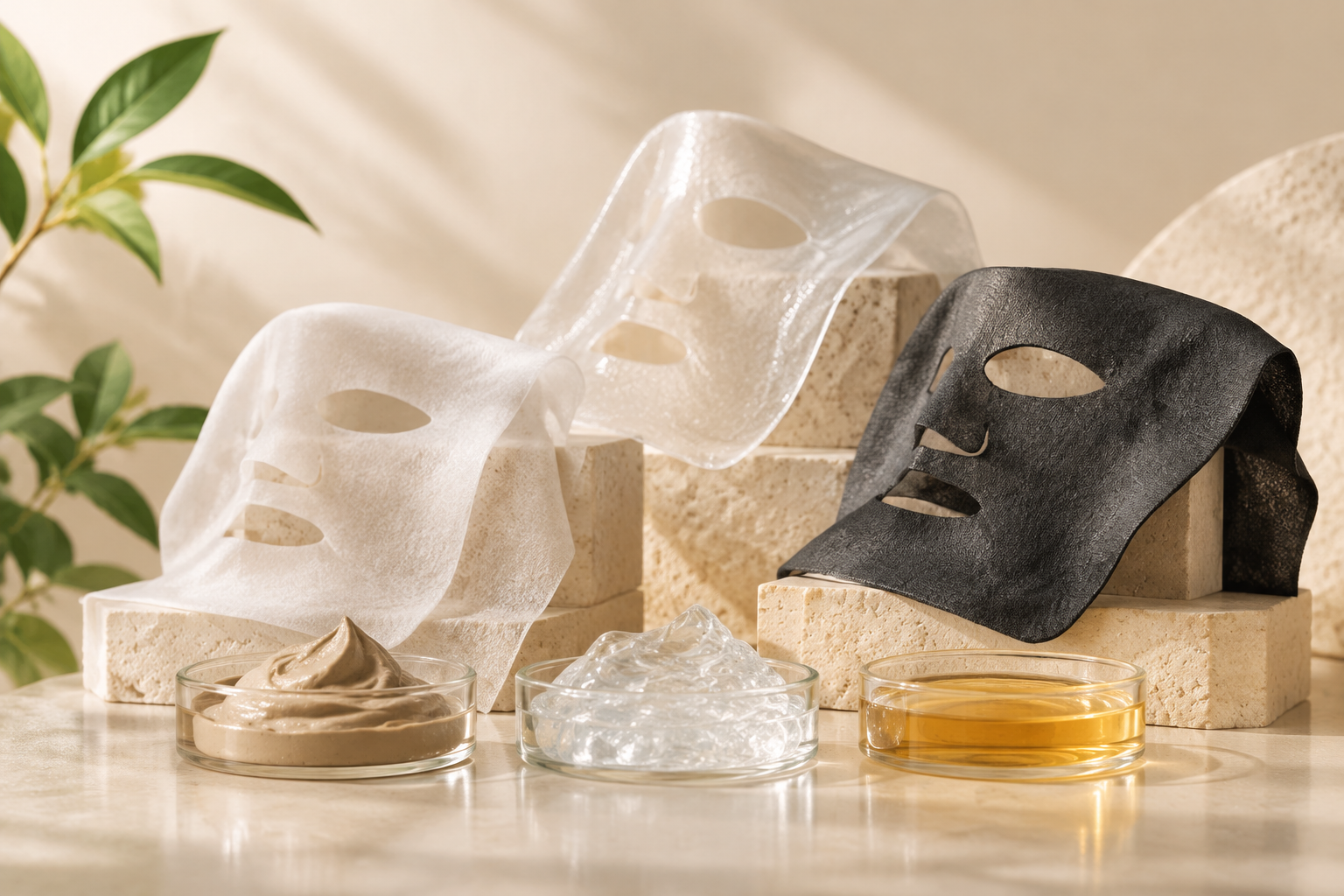
There is no single format that is best for every brand. The most suitable option depends on the desired sensory profile, target market, retail channel and product story. Below is a practical comparison for procurement and product-development planning.
| Mask Format | Typical Buyer Appeal | Formula Considerations | Packaging Considerations | Best-Fit Channels |
|---|---|---|---|---|
| Sheet Mask | Single-use convenience, visible essence saturation and a familiar skincare ritual. | Essence viscosity, sheet compatibility, fragrance level and preservative system should be evaluated together. | Individual sachets require seal integrity and appropriate pack-size planning. | Retail, e-commerce, gift sets, salons and subscription programs. |
| Clay Mask | Wash-off experience with a purifying, balancing or spa-inspired positioning. | Texture stability, spreadability, dry-down feel and rinse-off performance are key. | Jars, tubes or sachets should be chosen based on texture and intended usage frequency. | Retail skincare lines, spas and professional facial programs. |
| Sleeping Mask | Overnight care positioning with a comfort-focused cream-gel or gel texture. | Skin feel, residue, fragrance profile and compatibility with the rest of the routine matter. | Jars, tubes and airless packs can support different brand positions and user preferences. | Premium retail, online skincare brands and routine-based collections. |
| Hydrogel or Bio-Cellulose Mask | Premium sensory presentation and close-fit treatment positioning. | Material selection, essence loading and handling requirements should be considered during sampling. | Packaging must support the selected material and help maintain a consistent user experience. | Premium retail, professional beauty and targeted treatment collections. |
Develop Your Facial Mask Line
Share your market, desired product direction, packaging preference and expected order volume. We can help you evaluate suitable mask formats and organize the next development step.
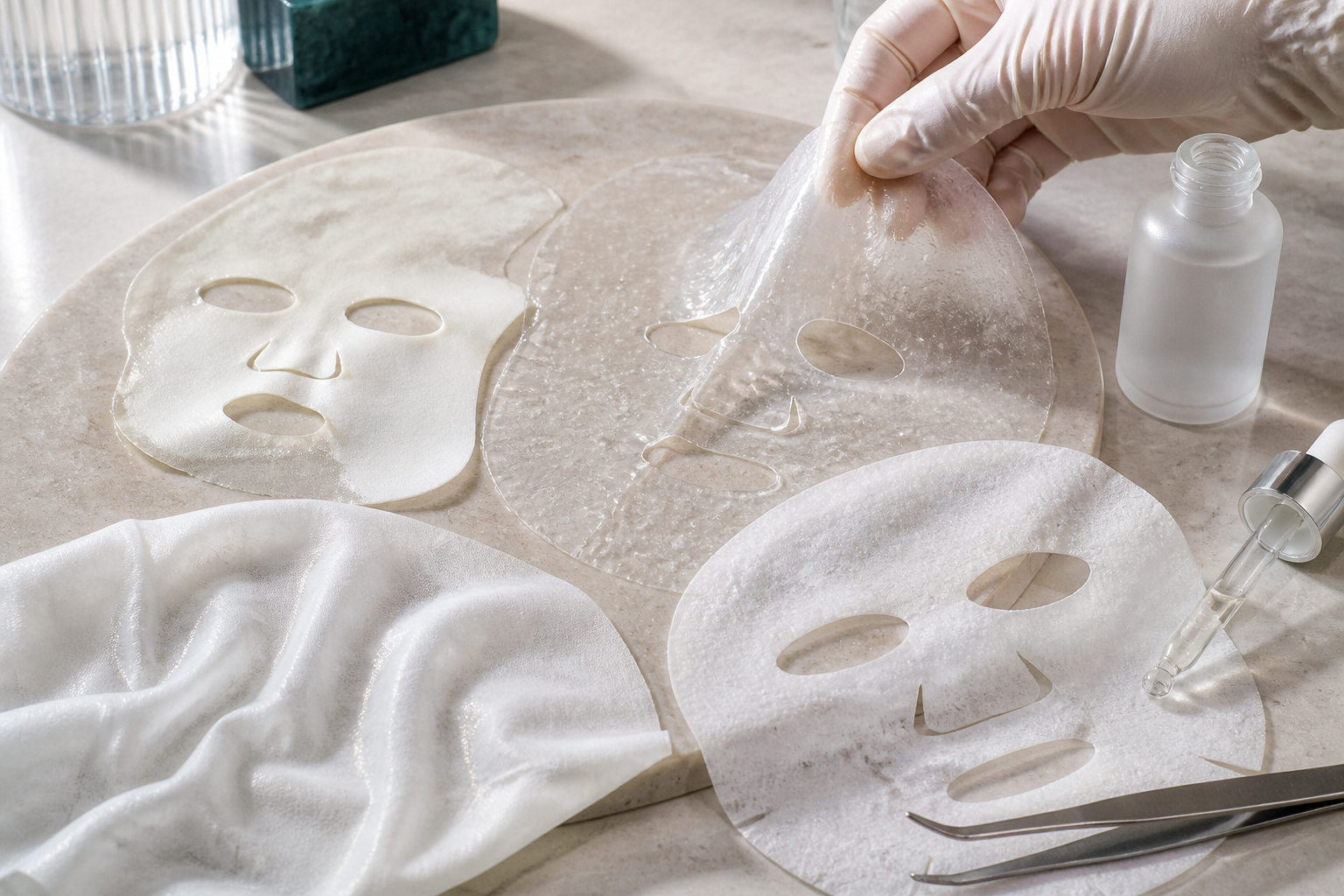
For sheet-mask projects, the sheet material is a major part of the product experience. It influences fit, softness, liquid handling, appearance and the overall positioning of the SKU. Instead of selecting a substrate only because it is fashionable, buyers should assess whether it supports their formulation direction and target price level.
Often chosen for a soft, modern and plant-fiber-oriented presentation. They can be suitable for brands seeking a comfortable everyday sheet-mask concept with a refined visual identity.
Often selected for close-fit, premium treatment concepts. Buyers should evaluate handling, formula compatibility, pouch format and cost structure before confirming the final material.
These materials may support a smooth, elegant and giftable product experience. The best choice depends on desired fit, essence system and packaging presentation rather than the material name alone.
A practical option for brands prioritizing broad-market accessibility, promotional programs or value-oriented multi-pack projects, subject to the selected quality level and formula direction.

A face mask formula should be designed around a clear product purpose. Rather than adding every popular active to one product, we recommend building the formula around the intended sensory experience, target users, packaging format and positioning statement. This helps brands create clearer product communication and a more coherent sample-evaluation process.
Hyaluronic acid, humectant systems, soothing botanical extracts and skin-conditioning ingredients are commonly explored for hydration-oriented masks. The objective is not only the ingredient story; the essence feel, tackiness, absorption feel and fragrance profile should also match the brand’s intended customer experience.
Centella asiatica, panthenol, beta-glucan and selected ceramide-related concepts may be considered when a brand is developing a comfort-focused or sensitive-skin-oriented line. Final wording and claims should be reviewed according to the intended sales market and available product substantiation.
Vitamin derivatives, niacinamide, antioxidant systems and selected botanical ingredients may support a radiance-oriented concept. For international markets, buyers should avoid making claims that exceed the available testing, documentation or local cosmetic-claim requirements.
We can support private label and custom projects across sheet masks, wash-off masks and overnight formats. Visit our Facial Masks product page to review the current product directions that may be relevant to your brief.
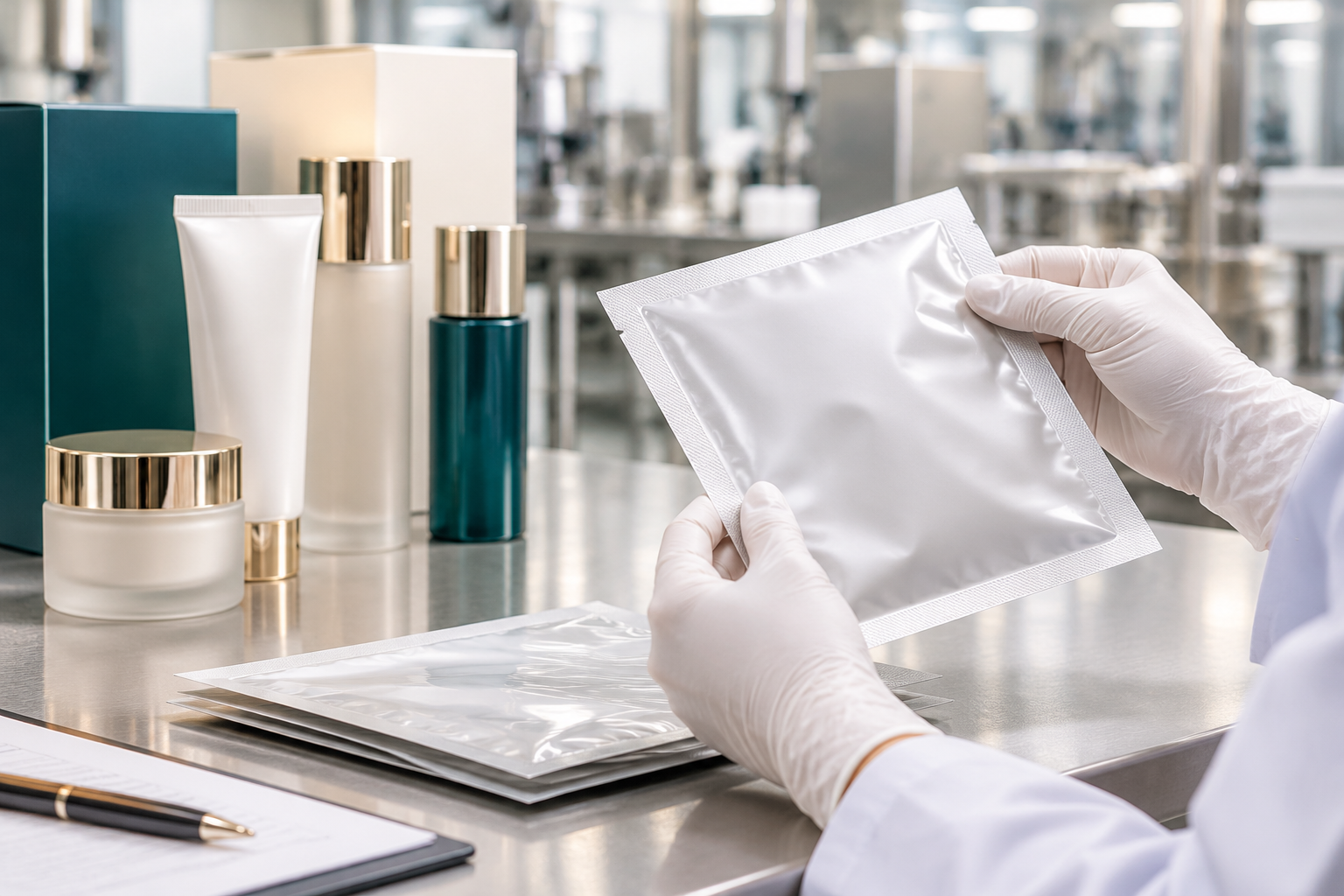
Packaging is not an afterthought in face mask development. For sheet masks, the pouch structure, filling quantity, heat-sealing conditions and transportation handling can all affect the delivered customer experience. For clay and sleeping masks, the package must match the viscosity, application style and expected frequency of use.
During development, we recommend assessing formula and packaging compatibility, fill performance, seal appearance, label requirements and the intended logistics route. A single-use pouch can provide controlled-dose convenience, but it should not be described as sterile unless a separately validated sterile process and appropriate substantiation support that statement.
The best face masks for a retail brand may not be the same as the best face masks for a salon or spa program. Retail-oriented projects often prioritize shelf appeal, clear benefits, compact packaging and product-story consistency. Professional buyers may place more emphasis on treatment protocols, pack sizes, service compatibility and the ability to create a coordinated facial-care menu.
Prioritize product differentiation, attractive packaging, a concise consumer message, sampling opportunities and product formats that work well in sets, promotions or repeat-purchase programs.
Prioritize professional usability, treatment positioning, supply reliability, product consistency and an assortment strategy that can serve both cabin treatments and retail sales.
A professional buyer should assess more than the sample itself. Before choosing a face mask manufacturer, ask questions that clarify development scope, communication efficiency and future production readiness.
At INTE, we support buyers who need more than a catalogue product. Whether you are building a single hero mask or a coordinated facial skincare collection, we can help you move from product brief to samples, packaging decisions and scalable manufacturing planning. Learn more about our beauty products contract manufacturing capabilities.
The right choice depends on your target customer, sales channel and product positioning. Sheet masks are often attractive for single-use convenience and visual presentation. Clay masks can suit wash-off or spa-style concepts, while sleeping masks may fit routine-focused premium skincare collections.
Yes. We can discuss a custom formulation direction based on your target market, preferred format, desired sensory profile, ingredient preferences, packaging requirements and commercial positioning.
Yes. Material selection can be discussed during product development. We recommend evaluating the material together with the essence system, pack format, target cost and intended user experience before final confirmation.
Yes. Private label facial masks can be developed for salons, spas, distributors and beauty businesses that want a branded retail item, treatment add-on or coordinated skincare assortment. The product format and packaging should be selected according to the intended sales and service model.
Start by sharing your target market, preferred mask format, product direction, packaging preference and expected order volume. You can review our Facial Masks product range first, then contact us to discuss samples and project feasibility.
Ready to Develop?
Whether you are sourcing a sheet-mask hero SKU, developing a clay-mask collection or planning a professional spa-oriented range, our team can support format selection, formula direction, packaging coordination, samples and scalable production planning.
Request a Mask Sample Kit View Facial Mask Products
Looking beyond masks? Explore our full Face Care OEM/ODM range for serum, toner, cleanser and face cream development.
 Hot News
2026-11-11
2026-11-09
2026-11-06
2026-11-04
2026-11-03
2026-10-30
Copyright © 2025 by Inte Cosmetics (shenzhen) Co., Ltd.
 EN