 EN


Which acne format scales faster for OEM?
For a private-label buyer, the faster acne format is rarely the one with the shortest-looking ingredient list. Scale comes from how clearly the brief connects the acne product’s use occasion, formula behavior, filling method, pack choice, and intended market. A simple-looking acne launch can slow down when those decisions arrive in separate rounds.
From a skincare formulation-development perspective, acne format selection should start with skin feel, active compatibility, and the intended user—not with one fashionable ingredient. A cleanser, leave-on serum, spot application, pad, or single-dose unit can each be workable for OEM. The practical question is which format asks the fewest unresolved questions from your current team.
Start by defining what “faster” means for an acne OEM project
“Faster” can mean a quicker route to a first sample, fewer changes before pilot filling, or a more manageable handoff to routine production. These are related but not identical. A format may be easy to bench-develop yet require more packaging checks; another may need more early texture work but make the user routine easier to explain.
Before comparing an acne format, align five points: the target user and routine step, the claimed product category in the intended market, the desired texture, the pack and applicator, and the evidence or documentation the brand expects. Common rework begins not because an acne concept is weak, but because the requirement is too broad to prioritize. “A high-quality acne product” is not a usable manufacturing brief; “a rinse-off gel for an evening routine in a specified pack” is much closer.
A practical comparison of common acne formats
| Format | Often quicker when | Questions that can slow scale |
|---|---|---|
| Rinse-off cleanser | The brand wants a familiar daily-use step and accepts a straightforward gel or cream-gel direction. | Viscosity, foam expectation, dispenser choice, and claim route still need agreement. |
| Leave-on serum | The positioning depends on a light, layerable feel and the target pack is defined early. | Stability, pH, sensory feedback, droplet or pump compatibility, and leave-on claim review may add loops. |
| Targeted spot format | The user scenario is narrow and the applicator is already selected. | Localized application, flow control, nozzle behavior, and consistent dosing require focused testing. |
| Pre-soaked pad | The brand has a clear convenience story and a compatible substrate and jar or sachet concept. | Liquid loading, seal integrity, material interaction, and pack supply coordination create additional dependencies. |
| Single-dose serum unit | A premium, measured-use concept is central and packaging development is already in scope. | Unit format, fill process, material sourcing, and validation of the user-opening experience can extend coordination. |
For many acne OEM briefs, a rinse-off cleanser is the more direct starting point when the concept and pack are settled. That is not a universal rule. A leave-on acne serum may move well when its formula direction and pump are already matched, while a pad or single-dose acne format can be sensible where the packaging system is part of the brand proposition.
Why cleanser formats often reach a stable brief sooner
A cleanser gives the team a defined use moment: apply, massage, rinse. That can make user instructions, texture targets, and pack discussions easier to frame. For an acne line, the brand can decide early whether the experience should feel fresh, low-foam, creamy, or gel-like, then use sample feedback to narrow the direction.
The advantage is not that a cleanser removes every development task. The project still needs compatibility checks and a realistic review of the intended acne language. The advantage is that the formula, routine, and pack can often be discussed in one connected brief. Rather than stacking selling points first, ask where the acne product sits in the user’s routine and what the user must notice when using it.
When leave-on acne formats need more coordination
Leave-on acne formats can provide a clear product story, particularly for brands building a routine around a serum or targeted step. Their scale path becomes more dependent on precise formulation and packaging choices. Texture, drying behavior, interaction with the dispensing system, and consumer feedback are all part of the same decision rather than separate approvals.
More accurately, the key issue is not simply which active is selected; it is the role of the acne formula in the full routine and the market route attached to its wording. In the United States, the FDA’s U.S. nonprescription acne monograph framework identifies benzoyl peroxide at 2.5% to 10% and salicylic acid at 0.5% to 2% for topical acne drug products. This does not determine whether a proposed product is suitable or compliant. It illustrates why a brand should settle its market, ingredient direction, and claims review before expecting a final scale plan.
In practical terms, an acne brief should use the word acne only where it explains the product category, routine role, market route, or packaging choice. That keeps the acne discussion useful for an OEM review rather than turning the page into a consumer-treatment claim.
Keep the acne brief specific enough to scale
An acne OEM brief becomes easier to evaluate when it names the acne format, routine step, texture direction, pack assumption, target market, and approval owner in one place. That lets a development team identify whether the acne project is primarily a formula question, a packaging question, or a documentation question. It also makes sample feedback more useful: reviewers can respond to the intended acne use experience instead of giving broad comments that restart the project.
For acne cleansers, note the desired rinse feel and dispenser. For an acne serum, note the layerability and the dispensing system. For a targeted acne format, describe the application area and applicator. These details do not lock every decision, but they reduce conflicting inputs before the acne formula and packaging move toward scale.
Packaging can decide the pace more than the base formula
OEM projects often involve brand, development, packaging, and documentation roles at once. An acne formula that looks settled can return to revision if the chosen pump, tube, pad container, or unit-dose pack changes late. The lower individual cost of a component does not necessarily mean lower overall coordination cost if it creates a new compatibility question or another artwork review.
For that reason, give the OEM partner a pack assumption with the first acne brief: component type, approximate fill size, primary application method, and intended market. If the pack remains open, specify whether the team should screen options during sampling rather than treating packaging as a post-formula task.
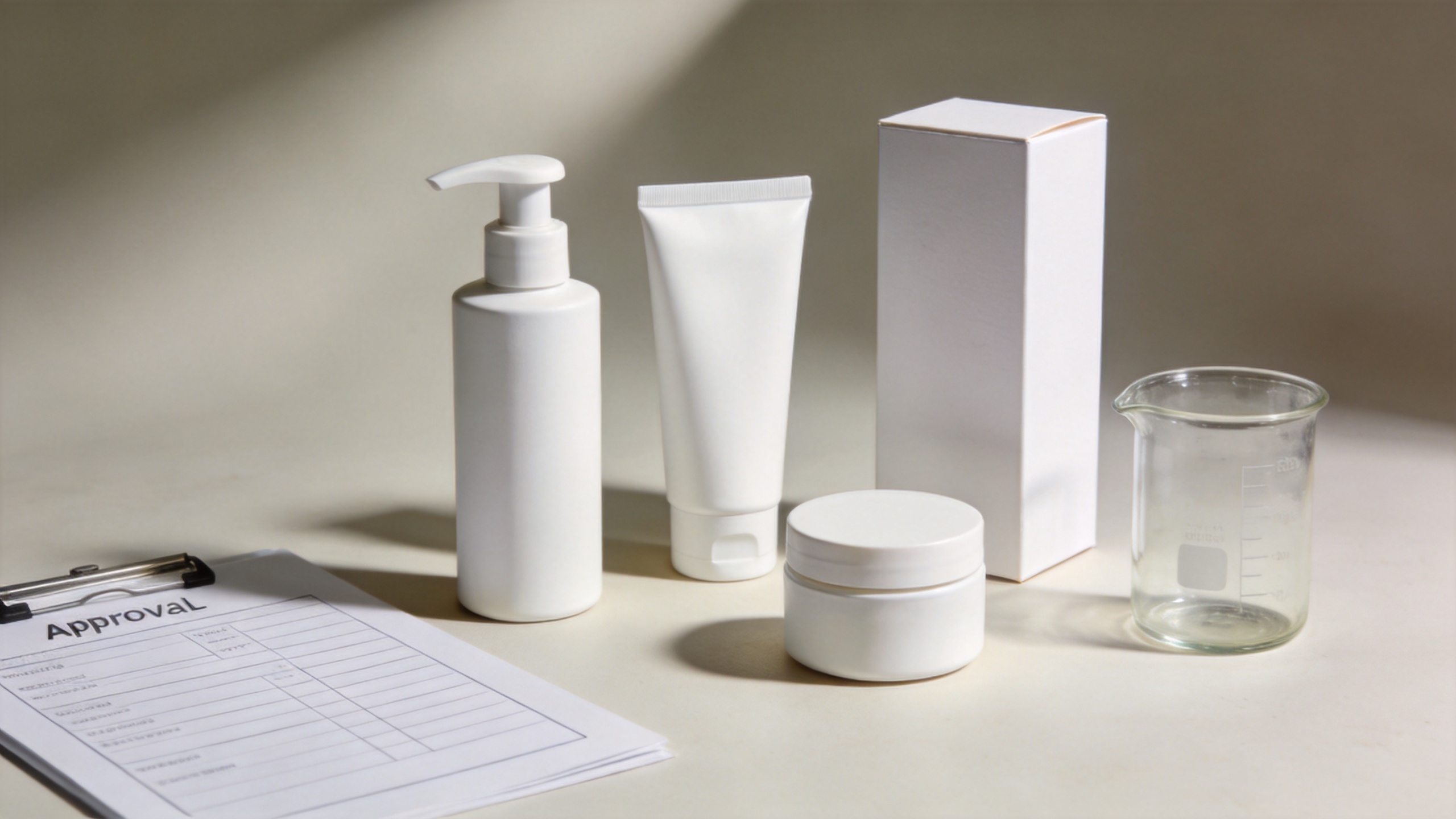
Use this decision tree for your next acne brief
- Choose the routine role. Is the acne concept a rinse-off first step, a leave-on layer, a targeted application, or a convenience-led unit?
- Lock the market route early. Describe the intended country or region and keep marketing language subject to the appropriate review.
- Set the pack assumption. Identify the preferred dispenser or state that pack screening is part of the sample phase.
- Rank what matters in feedback. Ask testers to comment on texture, dispensing, residue, and routine fit before adding secondary requests.
- Plan the handoffs. Confirm who owns formula feedback, component approval, artwork inputs, and release documentation.
For an acne private-label project, the format that scales faster is usually the one with the clearest decisions already made. If your brand needs a direct daily-use entry point, a cleanser may be the most manageable first format. If the brand’s value sits in a leave-on or convenience-led acne experience, invest earlier in the formula-pack brief. The productive next step is a concise requirement list that lets the OEM team identify the real dependencies before samples begin.
 Hot News


