EN


A collagen manufacturer can be an ingredient producer, a finished-product factory, or a business coordinating both. For a skincare brand planning an anti-aging serum, that distinction matters before price or lead time enters the conversation. The ingredient must fit the formula, while the finished product must fit the intended user, packaging and market. A useful sourcing brief brings those decisions together rather than treating collagen as a shortcut to a finished claim.
Start with a practical question: will the product be a daily serum, a single-use ampoule or a richer cream? Each format places different demands on texture, dispensing and project coordination, so give the collagen manufacturer the intended format at the outset. The following framework helps a brand compare supply routes and ask for evidence without assuming that a raw material's story automatically applies to the finished cosmetic.
Decide which supplier is responsible for what
A collagen manufacturer supplying raw material can provide information about identity, origin and batch controls. A cosmetic OEM turns approved ingredients into a finished formula and fills the selected pack. Some projects involve a distributor or more than one manufacturing site. In a request to a collagen manufacturer, make those roles explicit: who owns the ingredient specification, who approves substitutions, and who investigates an out-of-specification batch?
For an established formula, the brand may already specify an ingredient and need the OEM to assess compatibility and availability. For a new concept, the brand may ask the OEM to propose candidate materials and samples. Neither route removes the need to verify the actual source. Ask the collagen manufacturer and OEM how a change of origin, processor or grade would be communicated before it reaches the production schedule.
Translate the ingredient name into a usable specification
“Collagen peptide” is a commercial description, not a complete purchasing specification. Ask the collagen manufacturer for the precise ingredient identity and the name used for the intended label. The European Commission's CosIng database includes an entry for Hydrolyzed Collagen, but an entry alone is not an approval of a particular material or formula. Confirm the supplied material and labeling requirements with the team responsible for each market.
For a collagen manufacturer, source is another decision, not an interchangeable detail. Request the animal species and origin, processing information, and any supporting traceability documentation relevant to your markets and brand policy. If a brand seeks a vegan positioning, it should not describe animal-derived collagen as vegan; ask suppliers to substantiate the identity of any alternative instead. Do not assume that fish, bovine or other materials have identical sensory behavior or documentation needs.
A collagen manufacturer should also explain the form delivered, associated ingredients, solubility guidance, storage conditions and shelf life for the actual grade offered. Where molecular-weight information is supplied, ask how it is measured and how the range relates to the intended application. A smaller reported number alone does not establish penetration, efficacy or suitability in a particular serum.
Compare samples in the finished formula
Request a specification and a certificate of analysis for the proposed lot, including relevant identity and microbiological criteria. Agree with the collagen manufacturer and OEM on acceptance limits appropriate to the project rather than copying a generic target from a sales sheet. Check whether the sample and intended production material have the same source, composition and specification.
After the collagen manufacturer provides the candidate grade, evaluate the complete formula. A clear ingredient solution may behave differently after fragrance, preservatives, acids, other actives or packaging components are introduced. Ask the OEM to document appearance, odor, viscosity and pH over the agreed stability program and to assess the preservative system and pack compatibility. Test design, duration and pass criteria should be set for the actual product and destination; a promising early sample is not a substitute for completed validation.
Use the pack as part of the decision
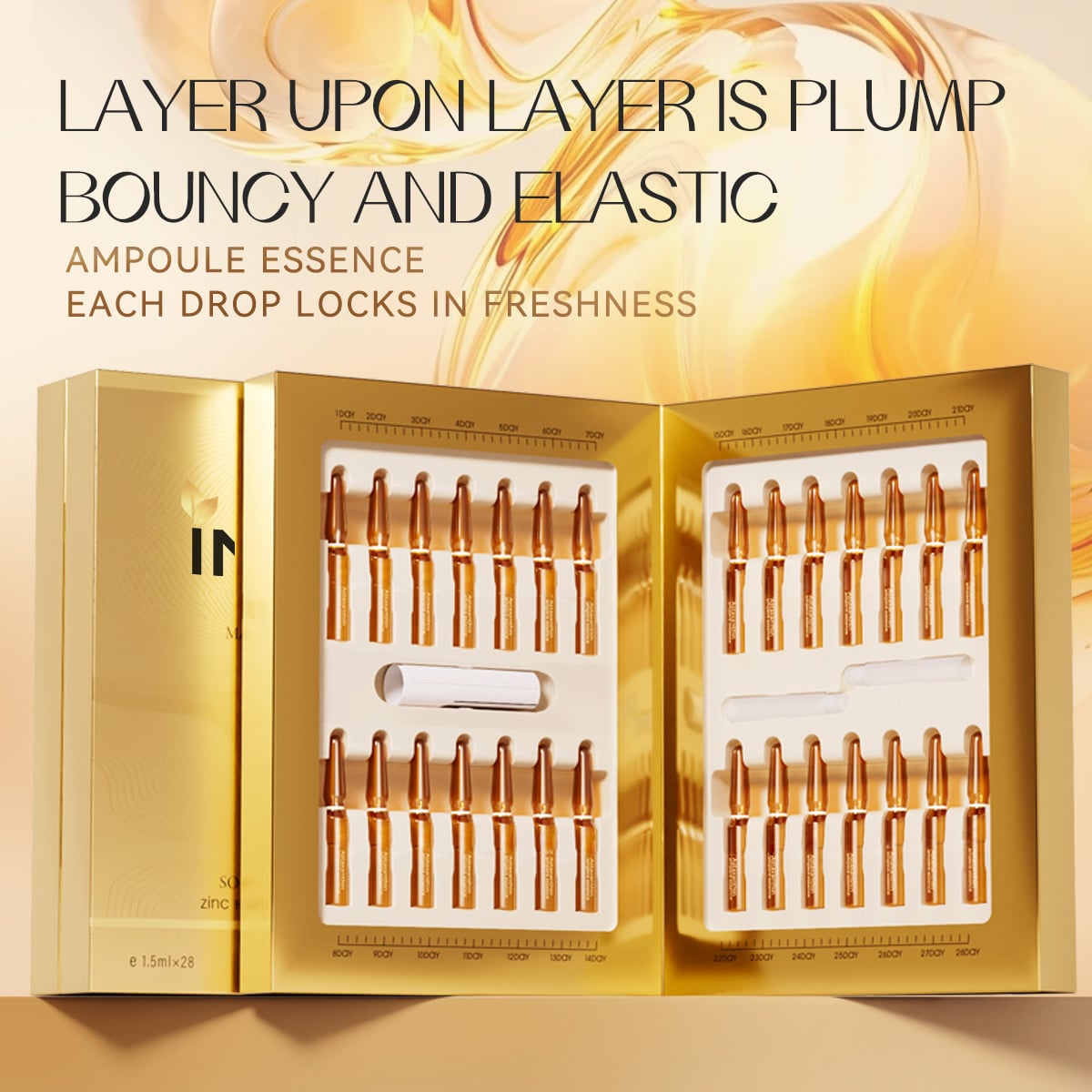
A single-use ampoule may suit a precise application ritual, while a pump bottle can offer a different dispensing experience. The collagen manufacturer and the OEM should both understand the intended presentation. Neither format automatically protects a formula from every compatibility or contamination issue. Discuss fill volume, closure integrity, transport and consumer use with the OEM before approving a pack. If the collagen manufacturer changes the ingredient's associated ingredients or solids content, ask whether the existing formula and pack need reassessment.
Check documentation before negotiating a supply commitment
Evidence should travel with the material, and the collagen manufacturer should be able to identify the lot to which each document applies. Ask the collagen manufacturer for the current technical data sheet, safety data sheet, specification, lot-specific analysis and origin information. Where relevant, request information on impurities, allergens and microbiological controls, plus any documentation required for animal-derived materials in the destination market. Obtain certificates only when applicable, verify their scope and validity, and do not infer a certification from a general brochure.
On the operational side, ask the collagen manufacturer about minimum order quantity, expected lead time, available lot sizes and change notification. A low initial quote may be less useful if a small launch requires a different pack size or if a key document arrives after artwork approval. Agree on how the collagen manufacturer handles deviations, complaints and traceability, and identify who holds retained samples or production records. Confirm all commercial terms in writing.
The brand and OEM should also clarify confidentiality and continuity. Who can access the full ingredient composition? Is an alternative source allowed, and what approval and testing would a substitution require? Consider the time needed to recheck a replacement in the finished formula rather than assuming equivalent names mean equivalent behavior.
Keep anti-aging claims within the evidence
A collagen manufacturer may provide ingredient studies, but the study material, concentration, use conditions and endpoints must be relevant before a brand relies on them. A topical cosmetic is not an oral supplement, and a raw-material result is not automatically a finished-product result. Ask the collagen manufacturer for the underlying study and discuss any proposed claim with qualified reviewers.
In the United States, the FDA distinguishes moisturizing claims that make wrinkles less noticeable from claims that a product increases the skin's collagen production, which can place the product in a drug or device category. The FDA also describes safety-substantiation responsibilities under the Modernization of Cosmetics Regulation Act of 2022. Requirements and exemptions depend on the facts, so have the responsible regulatory team review the product, intended claims and destination market. Do not present a supplier document as proof that the finished product is approved.
Build a brief that suppliers can answer
Send the same core brief to each collagen manufacturer and the OEM so responses can be compared on like terms. Include the target market, audience, product format, desired sensory profile, source preferences, expected order scale and proposed launch window. Tell the collagen manufacturer which claims are under consideration and which are still subject to evidence. Invite the partners to identify missing information instead of requesting a definitive quote for an undefined formula.
- Confirm the ingredient identity, origin, specification and lot documentation.
- Assign responsibility for formulation, filling, packaging and release decisions.
- Agree on sample feedback, stability, microbial and pack-compatibility review.
- Document change control, supply expectations and market-specific claim review.
Inte Cosmetics describes its business as skincare OEM/ODM and private-label manufacturing, with custom formulation, packaging and compliance support in its company profile. For a collagen project, use those topics as questions for an initial discussion, not as evidence that a particular ingredient, test or certification is already available. The right next step is a written brief and a review of the actual material and finished-product evidence with the selected collagen manufacturer and cosmetic OEM.
Ready to discuss your next skincare project? Share your product brief and target market with our team to explore formulation, packaging and compliance support.
 Hot News