EN
Skincare OEM & ODM Solution
Skincare OEM & ODM Solution: From Product Brief to Market Launch
A structured full-process solution for skincare brands that need coordinated support across product planning, formulation, sampling, packaging, manufacturing and delivery.
Discuss Your Product Project Explore Formulation SupportSolution Case Overview
Many skincare brands have a product concept but lack a complete development and manufacturing route. They may need to coordinate formula development, packaging suppliers, sampling, quality checks and bulk production through several different partners.
This creates additional communication costs and can make it difficult to keep the product brief, formula, packaging and delivery schedule aligned.
INTE’s full-process OEM and ODM solution is designed for brands that want to move from an initial product idea to a production-ready skincare product through a coordinated project workflow.
Typical Buyer Situation
This solution is suitable for brands, distributors, retailers, beauty businesses and entrepreneurs that are preparing a new skincare line or expanding an existing product range.
The buyer may have one of the following starting points:
- A product concept but no finalized formula;
- A benchmark product that needs to be developed into a private-label product;
- An existing formula that needs to be transferred to a new manufacturer;
- A packaging concept that needs to be matched with a suitable product;
- A completed formula that still requires sampling, filling and production coordination;
- A product line that needs a more reliable OEM/ODM supply partner.
The project route can be adjusted according to the brand’s existing materials, development stage, target market and expected launch schedule.
The Main Challenges Before a Skincare Product Launch
Before placing a bulk order, skincare buyers usually need to resolve several practical questions:
- Is the product concept suitable for the target customer and sales channel?
- Should the project use an existing formula, a benchmark formula or a new customized formula?
- Can the formula deliver the desired texture, appearance and usage experience?
- Are the selected packaging materials suitable for the product format?
- Can the artwork, packaging and product information be confirmed before production?
- What quality checks are required before filling and shipment?
- Who is responsible for coordinating changes between R&D, packaging and manufacturing?
- Can the approved specification be reproduced for future replenishment orders?
A full-process OEM/ODM solution addresses these questions in sequence instead of treating formula development, packaging and production as separate tasks.
INTE’s Full-Process Skincare OEM & ODM Solution
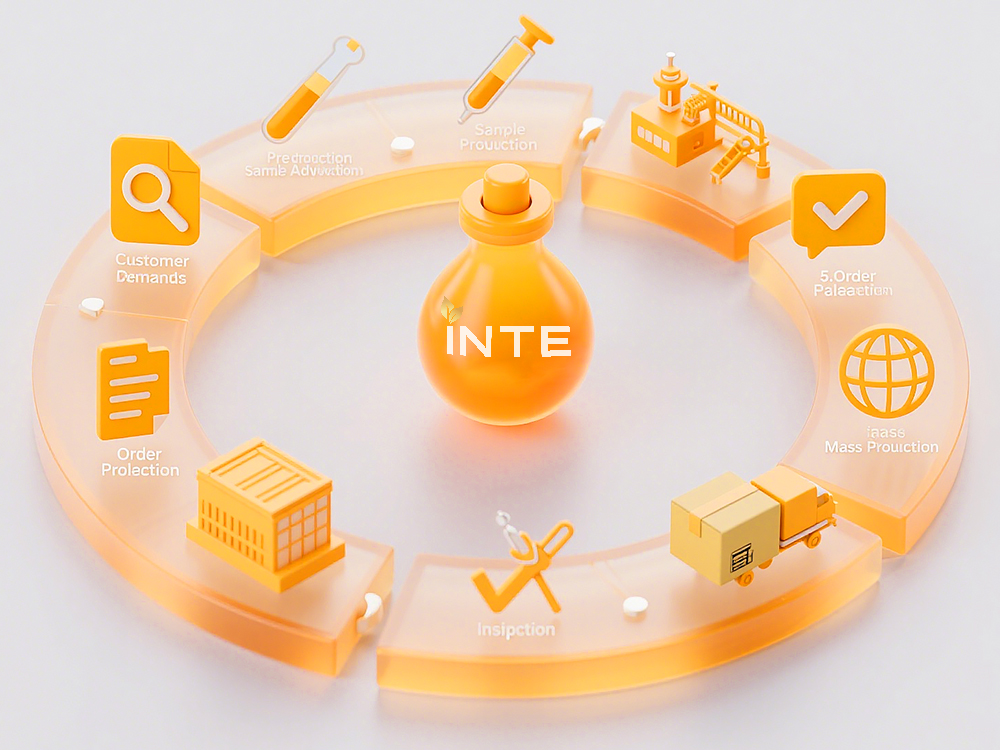
INTE organizes the project around six connected stages. Each stage has a specific purpose and prepares the information required for the next step.
01
Product Brief
Clarify product concept, target users, positioning, ingredients, texture, packaging and destination market.
02
Formula Route
Select an existing formula, adapt a benchmark or develop a customized formula according to the brief.
03
Sample Review
Evaluate formula performance, appearance, texture, packaging presentation and product experience.
04
Production Setup
Confirm specifications, raw materials, packaging materials, artwork and production requirements.
05
Quality Review
Coordinate in-process checks, finished-product inspection and relevant quality documentation.
06
Delivery
Complete finished-product packing and coordinate shipment according to the approved order details.
Stage 1: Product Brief and Project Planning
The project begins with a structured product brief. This step helps define what the brand wants to launch and what the manufacturer needs to prepare.
The brief may include:
- Target customer and product positioning;
- Product category and intended use;
- Desired product benefits and claims direction;
- Preferred active ingredients or benchmark products;
- Texture, fragrance and appearance requirements;
- Preferred packaging and fill volume;
- Target market and intended sales channel;
- Expected order quantity and launch schedule.
A complete brief allows the development team to identify potential formula, packaging and production requirements before samples are prepared.
Stage 2: Choosing the Right Formula Development Route
Not every brand needs to start from zero. Depending on the project, INTE can review three different development routes.
Existing Formula Selection
A brand may select from an existing formula direction when the desired product category, texture and positioning are already clear. This can help the project move more quickly to sample evaluation, subject to formula availability and project requirements.
Benchmark or Reference Development
If the buyer has a reference product, the project team can review the expected texture, appearance, fragrance, packaging and usage experience. The final formula should be developed according to the project brief and applicable product requirements.
Customized Formula Development
For brands with specific ingredient, texture or positioning requirements, a customized formulation route may be more appropriate. The development process can include ingredient review, formula adjustment, sample preparation and feedback-based refinement.
Customer-Owned Formula Transfer
Brands with an existing formula can provide the available technical materials for review. The manufacturer should confirm formula information, raw material availability, production feasibility, packaging compatibility and quality requirements before trial production.
The suitable route depends on the maturity of the product concept and the information available at the beginning of the project.
Stage 3: Sampling and Product Confirmation
Sampling is not only used to approve the appearance of a product. It is also an opportunity to confirm whether the formula, package and product positioning work together.
During sample review, buyers may evaluate:
- Texture and spreadability;
- Appearance and color;
- Fragrance and sensory experience;
- Packaging appearance and product presentation;
- Dispensing and application method;
- Label and carton layout;
- Product information and intended claims;
- Required adjustments before bulk production.
Once the sample is approved, the formula version, packaging specification and artwork should be recorded as the basis for production.
Stage 4: Production Preparation and Material Coordination
After sample approval, the project moves from development to production preparation. This stage connects the approved formula and packaging with the actual manufacturing plan.
Typical preparation activities may include:
- Confirming the final formula and product specification;
- Reviewing raw material and packaging material requirements;
- Checking packaging quantity and incoming materials;
- Confirming artwork, labels and external packaging;
- Preparing production instructions and inspection requirements;
- Reviewing the expected production and delivery schedule.
Raw material traceability is one part of this process. Brands that want to understand INTE’s approach to source control can review the traceable raw materials solution .
Stage 5: In-Process Quality and Finished-Product Review
Quality control should be integrated into the production process instead of being left until the final shipment stage.
Depending on the product and project specification, quality review may involve:
- Raw material and packaging material checks;
- Appearance and texture review;
- Basic physical and chemical indicators;
- Microbiological testing where applicable;
- Filling volume and packaging appearance;
- Label placement and packaging condition;
- Finished-product inspection before warehousing.
The exact testing items, sampling plan and release requirements should be confirmed according to the product type, formula, packaging and agreed quality specification.
Stage 6: Filling, Packaging and Delivery
After the formula, packaging and quality requirements are confirmed, the product enters filling and packing preparation.
The project team should confirm:
- Approved formula version;
- Filling quantity and product format;
- Packaging material specification;
- Label and carton artwork;
- Batch identification requirements;
- Finished-product inspection criteria;
- Shipment packaging and delivery destination.
The aim is to ensure that the product shipped to the buyer matches the approved sample and production specification.
Market-Ready Preparation for International Skincare Brands
If the product will be sold internationally, market requirements should be considered before the label and packaging artwork are finalized.
Depending on the destination market, the brand may need to review product information, ingredient naming, label content, claims, safety documentation, responsible-party details and notification or registration requirements.
INTE can provide relevant factory-side and product-side technical information within the agreed project scope. Final safety assessments, regulatory submissions and market-access decisions should be confirmed by the brand and its appointed regulatory professionals.
Brands preparing an EU or UK launch can review the EU and UK skincare OEM workflow before approving the final product and label.
What Buyers Receive from a Full-Process OEM/ODM Project
The exact scope depends on the product brief and project requirements. A typical project may include the following deliverables:
| Project Stage | Possible Deliverables |
|---|---|
| Product Planning | Product brief review, positioning discussion and development-route recommendation |
| Formula Development | Existing formula selection, benchmark development, formula adjustment or customized formulation |
| Sampling | Product sample, packaging sample and feedback-based refinement |
| Production Setup | Material coordination, specification confirmation and production preparation |
| Quality Review | In-process checks, finished-product inspection and relevant quality information |
| Delivery | Finished-product packing and shipment coordination |
Who Can Benefit from This OEM/ODM Solution?
- New skincare brands preparing their first product line;
- Existing brands expanding into new product categories;
- Distributors developing private-label skincare products;
- Beauty businesses launching professional skincare products;
- Brands that need formulation and manufacturing in one workflow;
- Companies transferring an existing formula to a new production partner;
- International buyers preparing products for different destination markets.
If your project is specifically focused on beauty salon products, INTE’s beauty salon ampoule skincare solution provides a more specialized overview of salon-oriented product requirements.
What to Prepare Before Contacting an OEM/ODM Manufacturer
Buyers can make the first project discussion more efficient by preparing:
- Target product category and customer group;
- Preferred active ingredients or benchmark product;
- Expected texture, fragrance and appearance;
- Packaging format and fill volume;
- Target market and sales channel;
- Expected order quantity;
- Desired launch schedule;
- Branding and packaging requirements;
- Required technical and market documents;
- Delivery destination and shipping requirements.
A clearer initial brief helps the manufacturer assess the most suitable development route and identify potential technical or scheduling issues earlier.
Frequently Asked Questions
What is included in a full-process skincare OEM project?
Depending on the project, support may include product brief review, formula selection or development, sampling, packaging coordination, production preparation, quality review, filling, packing and delivery coordination.
Can INTE work with an existing formula?
Existing formulas can be reviewed according to the technical information provided by the brand. Before production, the formula, raw materials, packaging compatibility, manufacturing feasibility and quality requirements should be confirmed.
Can INTE help develop a new skincare formula?
Depending on the product concept and project requirements, INTE can support existing-formula selection, benchmark development, formula adjustment or customized formulation.
Does the full-process service guarantee a fixed delivery time?
No fixed timeline should be assumed for every project. The schedule depends on the formula, testing requirements, packaging materials, order quantity, artwork approval and destination market. The final production and delivery plan should be confirmed for each order.
Can INTE support international skincare brands?
INTE can provide relevant factory-side and product-side technical information within the agreed project scope. The brand and its appointed regulatory professionals remain responsible for confirming final market requirements and regulatory decisions.
What is the difference between OEM and ODM skincare production?
OEM projects are usually based on the buyer’s formula, specification or product requirements, while ODM projects may use an existing formula or development route provided by the manufacturer. The exact cooperation model should be confirmed according to the project brief.
Ready to Build Your Next Skincare Product?
Share your product concept, target market, formula direction, packaging requirements and expected order quantity. INTE can help review the appropriate OEM/ODM development route for your project.
Start Your Product Discussion